Blog
Dog Struggles Explained: Why the Right Training May Surprise You
When a dog struggles with anxiety. many people assume the best way forward is to expose them to the scary things – like taking them into busy places to “get them used to it “. Others may jump straight into obedience classes, believing that teaching the dog not to bark or lunge will solve the problem.
But here’s the truth: all dogs are individuals and not every training path looks the same. For many anxious dogs, it’s not about “stopping” behaviours. Instead, it’s about building confidence, strengthening the bond with their family, and developing trust.
In fact, a busy class environment often isn’t the right starting point. One- to -one sessions can be far more effective in helping dogs feel safe and understood. Sometimes, the training that makes the biggest difference isn’t traditional obedience at all.
Over the years here in West Cumbria , we’ve found that activities like scent work and canine hoopers can transform anxious dogs , creating calmer, more confident companions while deepening the handler- dog partnership.
Why Scent Work Helps
At it’s simplest , scent work taps into a dog’s natural instincts to sniff and forage – even just searching for food can be deeply satisfying, But we also teach passive scent detection, where the dog learns to find a specific target scent (like a red Kong , cloves or gun oil).
Through reward -based training , dog’s discover how to signal clearly to their handler that they’ve found the scent. The handler’s role? Watching closely for subtle changes in the dog’s body language – it’s true teamwork , because only the dog’s nose can do the work.
Scent work is more than a game. It requires thinking and problem- solving, which keeps dogs in a calm, focused state of mind – the complete opposite of reactive. impulsive behaviour.
Why Canine Hoopers Helps
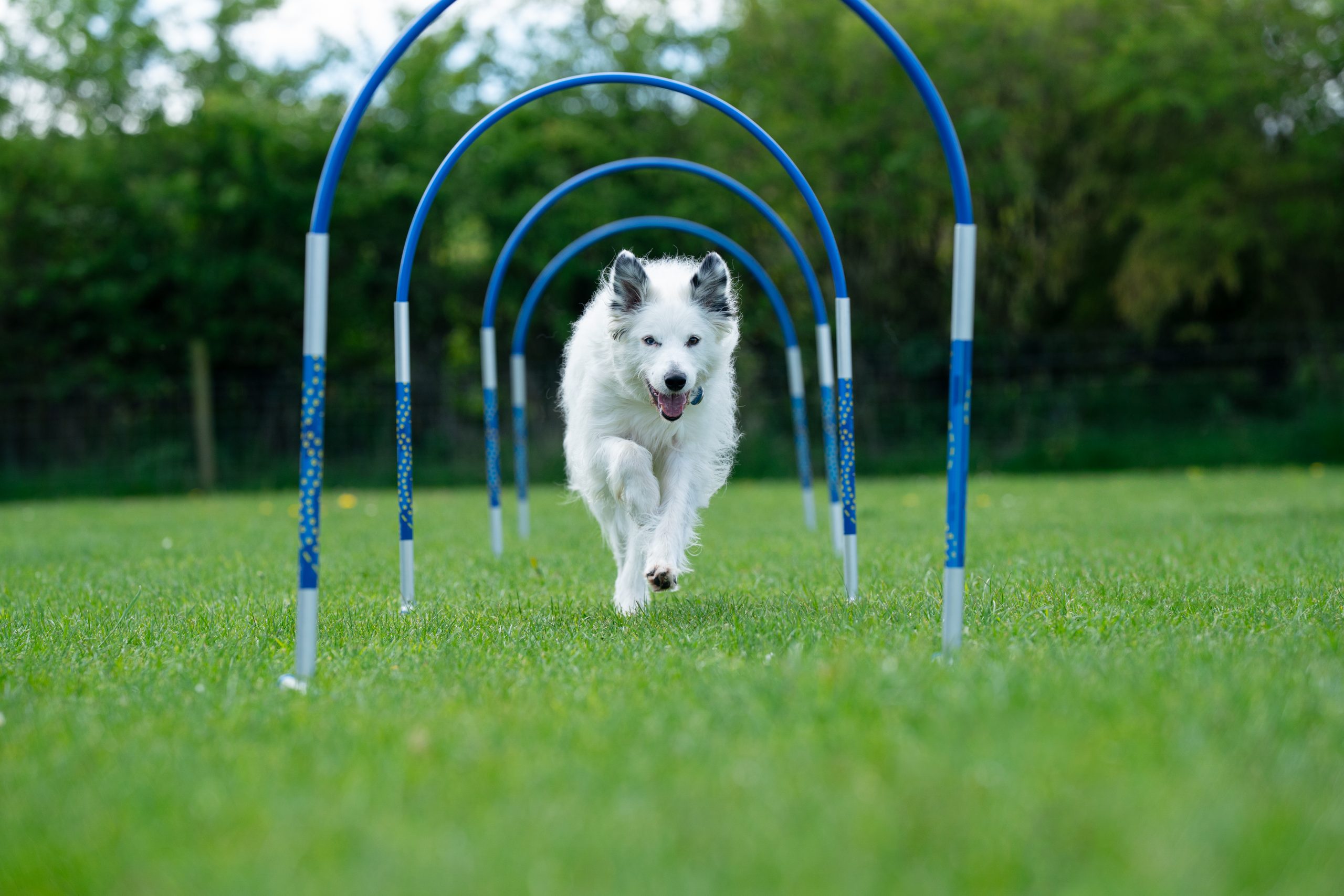
Canine Hoopers training is another activity that builds confidence and trust. It’s a low-impact sport where dogs navigate hoops, tunnels, mats and barrels. There’s no jumping involved, so its suitable for any breed.
We use shaping techniques (like the “hotter/colder” game from childhood) to guide the dog in discovering new behaviours at their own pace. This dog- led approach boosts confidence while keeping training fun and pressure – free. Most dogs love to run, and hoopers gives them an outlet to do so while staying engaged with their handler.
Real Success Story Shug
Take Shug (pictured above) . for example – a deaf dog who also understandably struggles with anxiety around other dogs. He started with 1:1 canine hoopers sessions , gradually built confidence, and later joined in with some group classes. Recently, Shug even competed in his very first canine hoopers competition here in West Cumbria.
In the ring . he didn’t pay attention to anything except his hoops and his mum. He beamed with joy the entire way round.
The Takeaway
Finding an activity your dog truly enjoys can be the key to unlocking confidence and creating a stronger bond. Sometimes, the path forward doesn’t look like traditional obedience training at all – and that’s okay.
Be open to different solutions. The right approach for your dog might not be what you first imagined – and it may just lead to happier, calmer days for you both.
Current Group Dog Training Classes here in West Cumbria
Cleator Moor Monday 7pm Life Skills 8pm Activity Class (scent & rally obedience) Tuesday 7pm Life skills Seaton Village hall – Thursday 7pm Scent class
Canine Hoopers Classes various locations Cumbria